About me
I'm Giulia Gubernati and I've always had a passion for art and creative craftsmanship. After graduating from the Accademia Albertina di Belle Arti in Turin, I embarked on a career in theatre set design, developing an aesthetic sensibility and an eye for detail.
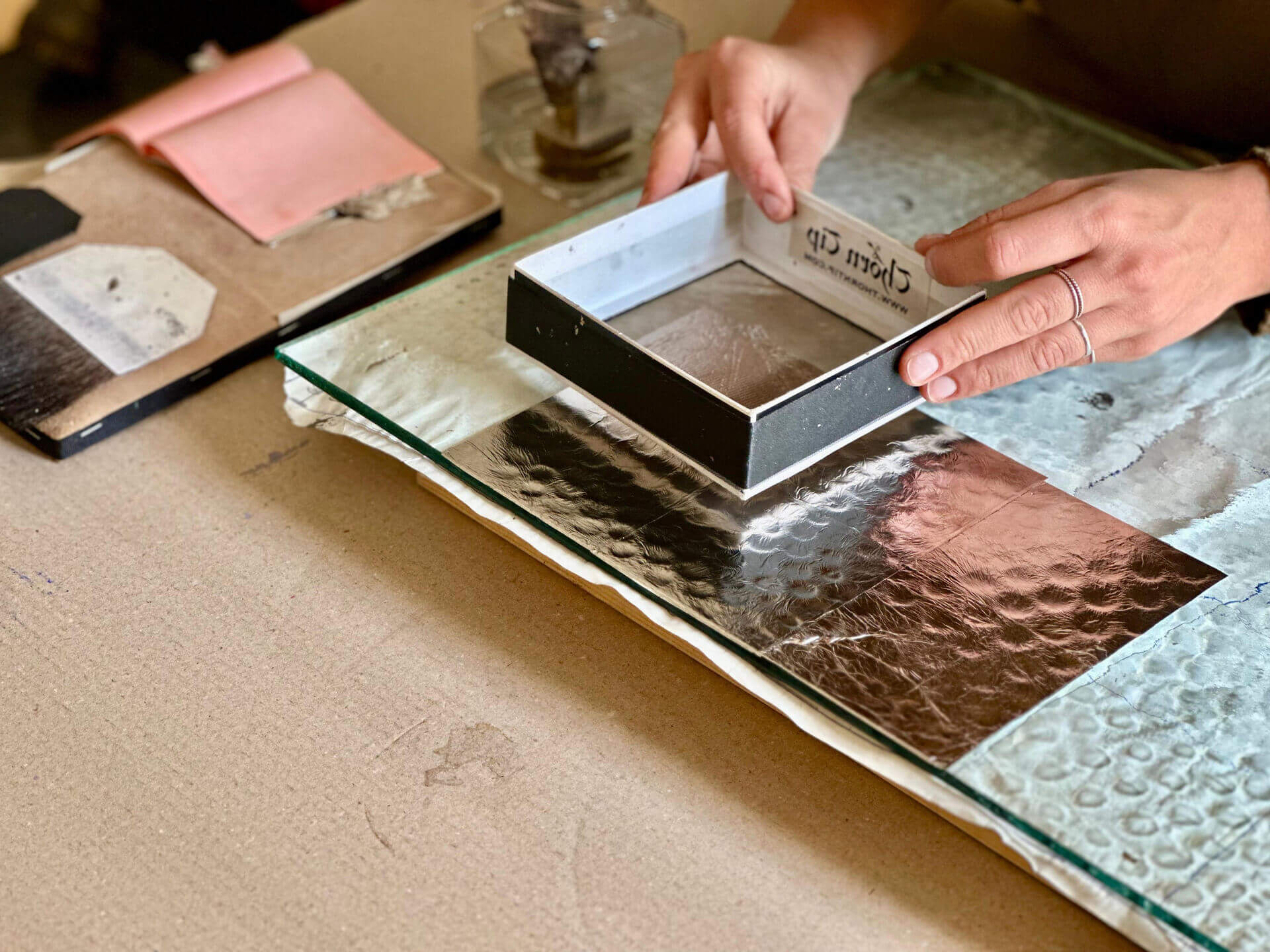
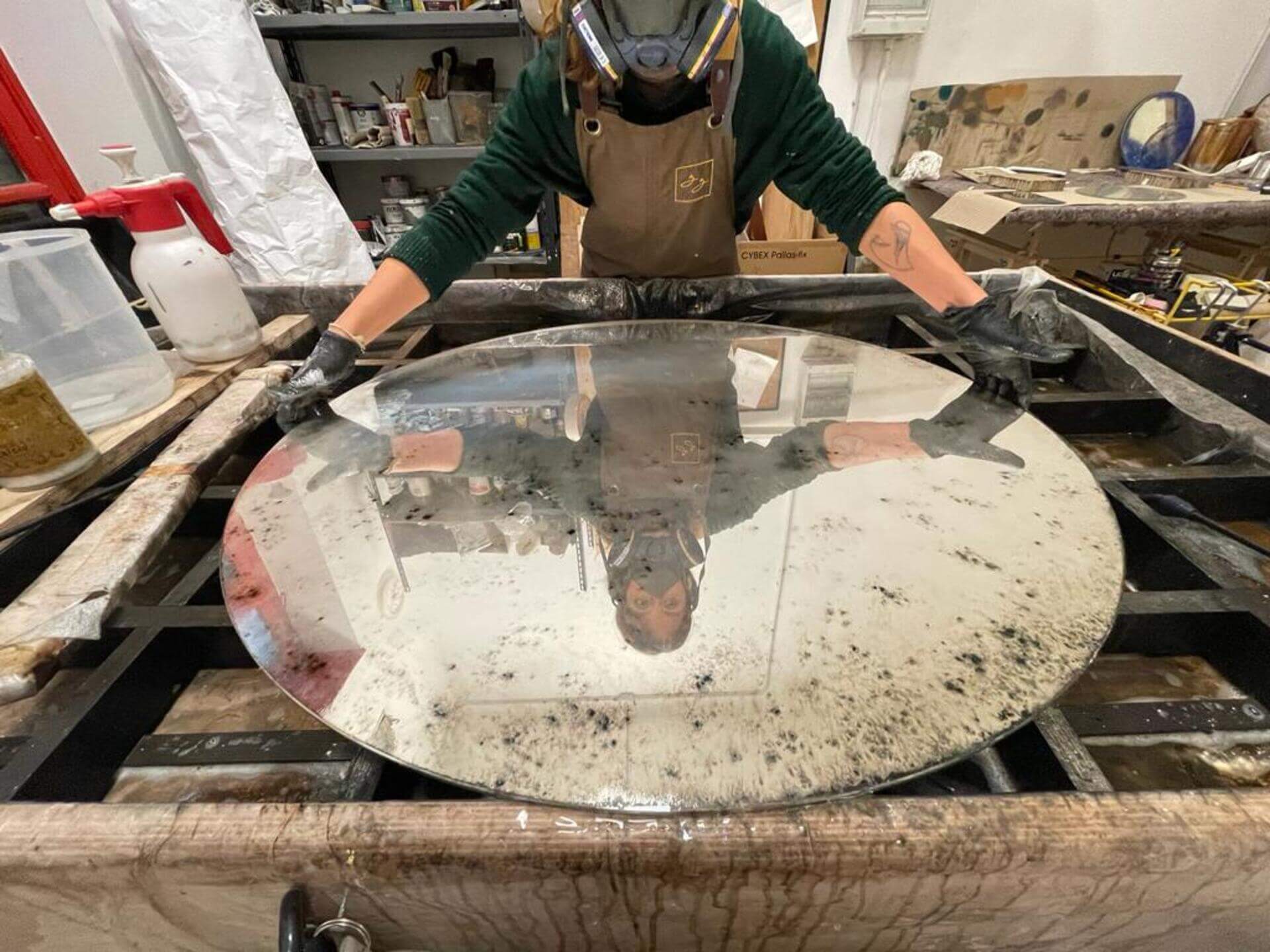
After moving to London, I significantly expanded my professional experience by exploring the decorative arts and specialising in glass finishes. There, I developed my skills in techniques such as verre églomisé and the antiqued mirrors
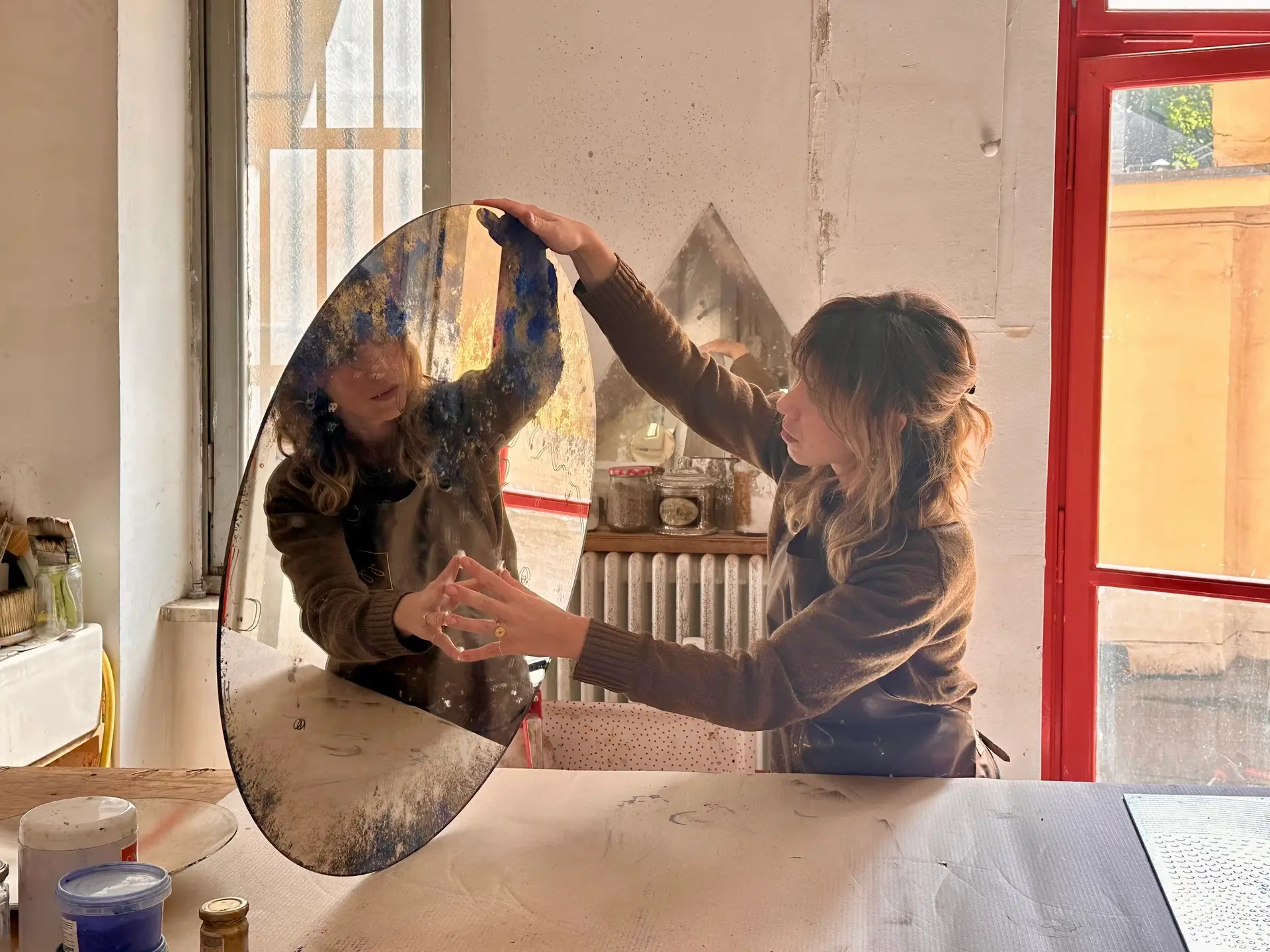
After spending many years in London, I have now returned to Italy, where I work in my studio.
The experience I have gained through these artisanal processes, combined with my international background, has helped to shape my personal artistic approach.
Today, I create modern and elegant works that combine pigments and resins, often enhanced with delicate gilding.
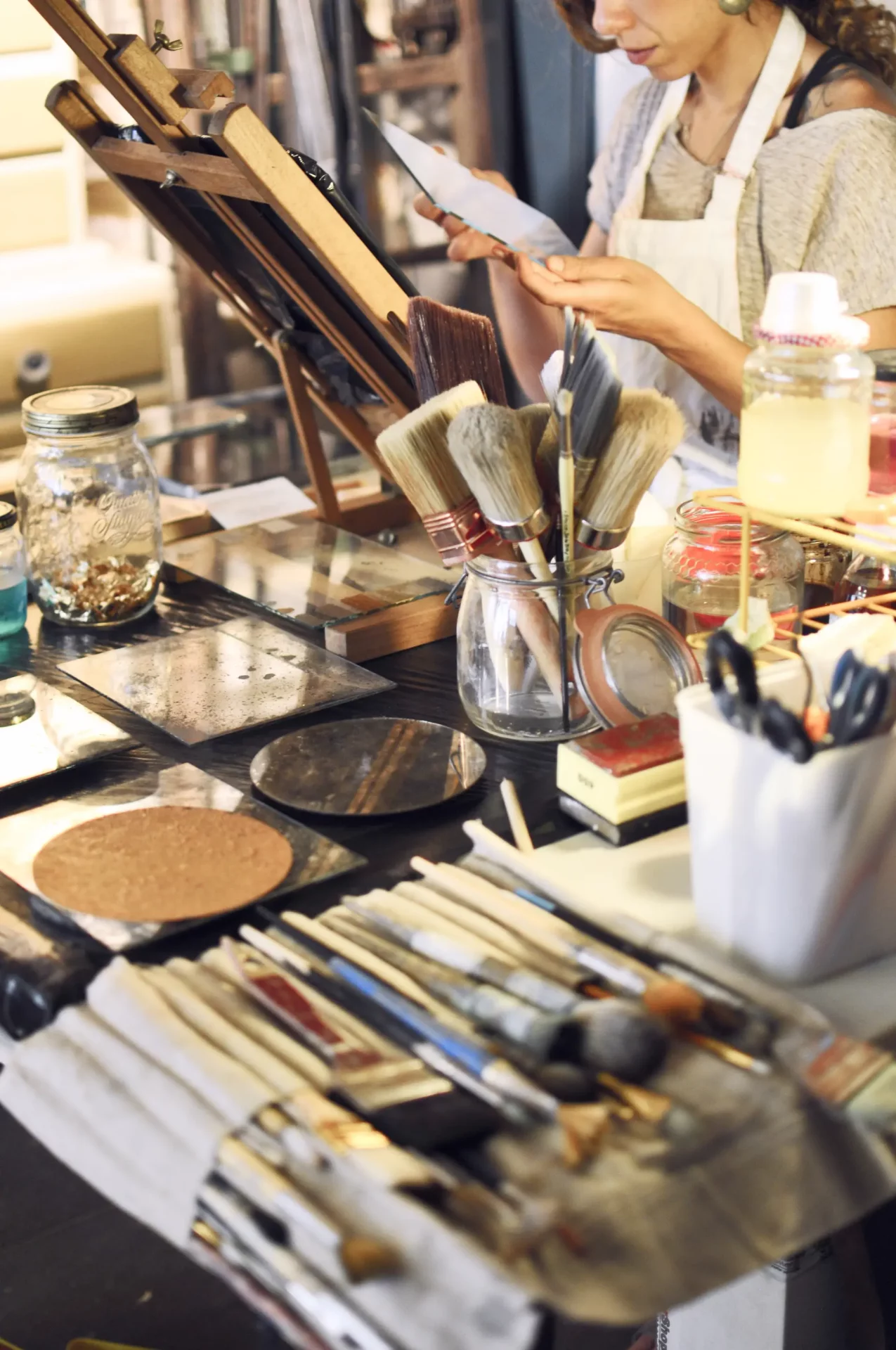
My entirely handcrafted method allows me to create truly unique pieces. For a bespoke finish, the client can choose the materials and decorative motifs.
My creative drive leads me to constantly explore materials, techniques, and both traditional and modern production processes, with experimentation at the heart of it all.